









Disclaimer: This information is not a substitute for professional medical advice, diagnosis or treatment.
Clinically reviewed by Dr James Harris, MBBS, FRACGP
AHPRA: MED0000981120
Shingles is a painful viral infection caused by the reactivation of the chickenpox virus (varicella-zoster virus). It typically causes a blistering rash on one side of the body and can lead to long-lasting nerve pain if not treated promptly. In Australia, shingles becomes more common with age, particularly in people over 50 and those with weakened immune systems1.
Early diagnosis and treatment can help reduce the severity and duration of symptoms, making it important to seek medical advice as soon as symptoms appear.
What is shingles?
Shingles, also known as herpes zoster, occurs when the virus that causes chickenpox becomes active again after remaining dormant in nerve tissue for many years.
Anyone who has had chickenpox can develop shingles. While the condition can occur at any age, the risk increases significantly after age 50 and among people with weakened immune systems. Approximately one in three people will experience shingles during their lifetime2.
What causes shingles?
After recovering from chickenpox, the varicella-zoster virus remains inactive in the body’s nerve cells. In some people, the virus reactivates years or decades later, resulting in shingles.
Common factors associated with shingles include:
- Ageing and natural decline in immune function
- Physical or emotional stress
- Illness or infection
- Immune-suppressing conditions or medications
- Cancer treatments such as chemotherapy or radiotherapy
While shingles can occur without an obvious trigger, older Australians and immunocompromised individuals are at greater risk3.
What are the early symptoms of shingles?
The first signs of shingles often appear several days before a rash develops.
Common early symptoms include:
- Burning, tingling or shooting nerve pain
- Itching or increased skin sensitivity
- Headache
- Fatigue
- Feeling generally unwell
- Sensitivity to touch
- Mild fever
These symptoms typically affect a specific area on one side of the body or face.
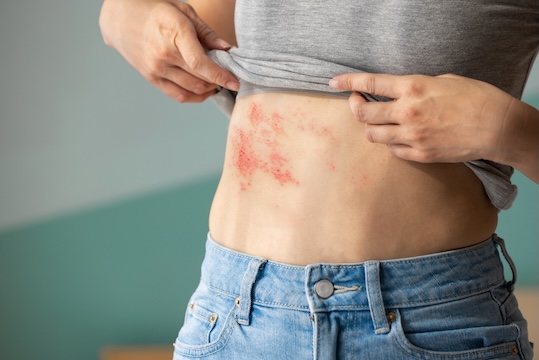
What does a shingles rash look like?
Within a few days of the initial symptoms, a rash usually develops.
The shingles rash often:
- Appears on one side of the body only
- Forms a band or strip along a nerve pathway
- Starts as red patches or bumps
- Progresses into fluid-filled blisters
- Causes pain, burning or itching
- Crusts over and gradually heals
Common locations include the chest, back, abdomen, neck and face. In some cases, shingles can affect the eyes or ears, requiring urgent medical attention.
How is shingles diagnosed?
Doctors can usually diagnose shingles by reviewing your symptoms and examining the rash.
A telehealth consultation may be suitable for many patients. Your doctor may ask for photographs of the affected area to help confirm the diagnosis and determine whether treatment should begin.
Shingles treatment options in Australia
Antiviral Medications
Antiviral medicines are the most common treatment for shingles and work best when started as early as possible, ideally within 72 hours of the rash appearing.
These medications may help:
- Shorten the duration of shingles
- Reduce the severity of symptoms
- Lower the risk of complications
- Reduce nerve pain
Pain Management
Pain from shingles can range from mild discomfort to severe nerve pain.
Depending on symptom severity, treatment may include:
- Paracetamol
- Anti-inflammatory medications
- Prescription pain relief
- Nerve pain medications
Your doctor will recommend the most appropriate treatment based on your symptoms and medical history.
Supportive Care
Self-care measures may include:
- Keeping the rash clean and dry
- Wearing loose-fitting clothing
- Applying cool compresses
- Getting adequate rest
- Staying hydrated
While shingles is most common in adults over 50, doctors are increasingly seeing cases in younger adults, including women in their 30s and 40s. Researchers are still investigating why, but factors such as stress, chronic health conditions, autoimmune disease and immune suppression may play a role.
What are the complications of shingles?
While many people recover fully, shingles can sometimes cause serious complications.
Post-Herpetic Neuralgia (PHN)
The most common complication is post-herpetic neuralgia, a condition where nerve pain continues after the rash has healed.
Symptoms may include:
- Burning pain
- Sensitivity to touch
- Persistent discomfort lasting months or years
Studies suggest approximately one in five older adults who develop shingles may experience post-herpetic neuralgia.
Eye and Ear Complications
Shingles affecting the face can sometimes involve the eyes or ears and may lead to:
- Vision problems
- Eye infections
- Hearing issues
- Facial weakness
These symptoms require urgent medical assessment.
Can telehealth help with shingles?
Yes. A telehealth GP consultation can often help with:
- Assessing symptoms
- Reviewing photos of the rash
- Diagnosing uncomplicated cases
- Prescribing antiviral medication where clinically appropriate
- Providing pain management advice
- Arranging referrals if further assessment is needed
Early treatment is important, so seeking medical advice promptly can improve outcomes.
How can shingles be prevented?
Vaccination is the most effective way to reduce the risk of shingles and its complications.
In Australia, shingles vaccination is recommended for:
- Adults aged 50 years and over
- People with weakened immune systems
A funded vaccination program is available for eligible Australians under the National Immunisation Program.
Frequently Asked Questions about shingles
Is shingles contagious?
You cannot catch shingles from another person. However, someone with shingles can transmit the varicella-zoster virus to a person who has never had chickenpox or been vaccinated, causing chickenpox rather than shingles.
How long does shingles last?
The rash usually lasts between 2 and 4 weeks, although some people experience lingering nerve pain for longer.
When should I see a doctor about shingles?
You should seek medical advice as soon as possible if you develop a painful rash, burning sensation or tingling on one side of your body, particularly if you are over 50 or immunocompromised.
Can shingles come back?
Most people only experience shingles once, but recurrence can occur, particularly in people with weakened immune systems.
What is the first symptom of shingles?
Pain, burning, tingling or skin sensitivity often appears several days before the rash develops.